
639 Hz Frequency for Sleep: Free Tone, Meaning & Uses
What 639 Hz is, its traditional meaning of connection and emotional balance, and how to use this warm Solfeggio tone for sleep. Try it free in Momental.
By Momental · · 8 min read
639 Hz is one of the nine Solfeggio frequencies used in meditation, relaxation, and sleep routines. It is usually described as a tone for connection, relationships, and the heart, but those are traditional listening cues, not medical facts. For sleep, the real question is whether this warm mid tone helps you unwind at the end of the day.
What is the 639 Hz frequency good for?
639 Hz is a mid-range Solfeggio tone traditionally associated with connection, relationships, and emotional balance. For sleep, people use it as a soft, warm wind-down sound, especially when blended into a pad or ambient soundscape. Evidence for specific effects is limited, so treat it as a calming backdrop rather than a treatment.
What 639 Hz actually is
Hertz measures speed. A 639 Hz tone vibrates 639 times a second, and that rate is what your ear hears as pitch. On a piano, 639 Hz falls between two keys, D♯5 and E5, a little more than an octave above middle C. It is a clear, sung-melody kind of pitch: brighter than a cello, softer than a whistle.
That higher pitch also changes how loud the tone seems. Human hearing is tuned to favor the middle and upper-middle range over deep bass, so 639 Hz comes across as more present than 174 Hz at the same volume setting. Start a notch quieter than you would for a low tone.
The traditional meaning of 639 Hz
In modern sound-healing tradition, 639 Hz is connected with the heart, with harmony in relationships, and with emotional balance. The theme is softening and connection, which is why it appears in practices focused on warmth and reconciliation rather than alertness.
It sits higher than the grounding tones like 174 Hz and 396 Hz but lower than the bright meditation tones like 852 Hz and 963 Hz. That mid placement gives it a gentle, musical quality that many people find easy to listen to at night.
These meanings are experiential cues, not proven effects. If the "connection" framing helps you relax into a calm headspace, use it. If the symbolism does nothing for you, judge 639 Hz purely on whether its warmth makes the room feel softer.
639 Hz vs nearby calming tones

| Tone | Traditional cue | Feel | Best bedtime role |
|---|---|---|---|
| 528 Hz | Warmth, repair, "love" | Mid, musical | Warm, melodic wind-down |
| 639 Hz | Connection, balance | Warm mid | Soft emotional settling |
| 432 Hz | Calm tuning | Mellow musical | Whole tracks tuned lower |
| 741 Hz | Clarity, clearing | Brighter | Earlier evening, can feel alerting |
639 Hz pairs naturally with the warmer 528 Hz tone if you want a softer, more emotional set, or with 432 Hz music if you prefer full tracks tuned to a mellower pitch rather than a single sustained tone.
639 Hz benefits: what the research says
- Untested639 Hz balances relationshipsA heart-chakra meaning from sound healing. Never studied.
- WeakSolfeggio-tuned music eases stressOne nine-person pilot, and it used 528 Hz music, not 639 Hz.
- PromisingCalming music helps you sleepA Cochrane review of 13 trials found music may improve self-reported sleep.
There is no research on 639 Hz itself. The closest Solfeggio study, a 2018 pilot of nine adults, tested music tuned to 528 Hz, so it tells us nothing specific about this tone. The firmer ground is music in general: a 2022 Cochrane review found that relaxing music may help people with insomnia rate their sleep as better. Choose 639 Hz because its warmth suits your evening, not because of a promised effect on your relationships.
How to use 639 Hz for sleep
Keep it quiet. 639 Hz works best blended into a pad, harp, or ambient layer rather than played as a bare sine wave. A warm tone at low volume sits behind your breathing instead of pulling your attention.
Use a timer. You do not need the tone playing all night. A 20 to 45 minute fade is plenty for most people to drift off. Starting it at the same point in your wind-down each night turns it into a reliable cue that the day is closing.
Test before committing. Give 639 Hz three nights at the same volume and timer length before changing anything. If a pure tone feels thin, layer it with rain or compare it against the textured options in our guide to the best sounds for deep sleep. The best sign it is working is that you simply stop noticing it.
639 Hz in Momental
In Momental, 639 Hz sits in the "Healing Frequencies" section on the home screen, next to named tracks like 174 Hz, 285 Hz Harmony, 396 Hz, and 528 Hz. You tap the tone, set a timer, and let it fade out as you fall asleep. No talking, no lessons, no fiddly setup.
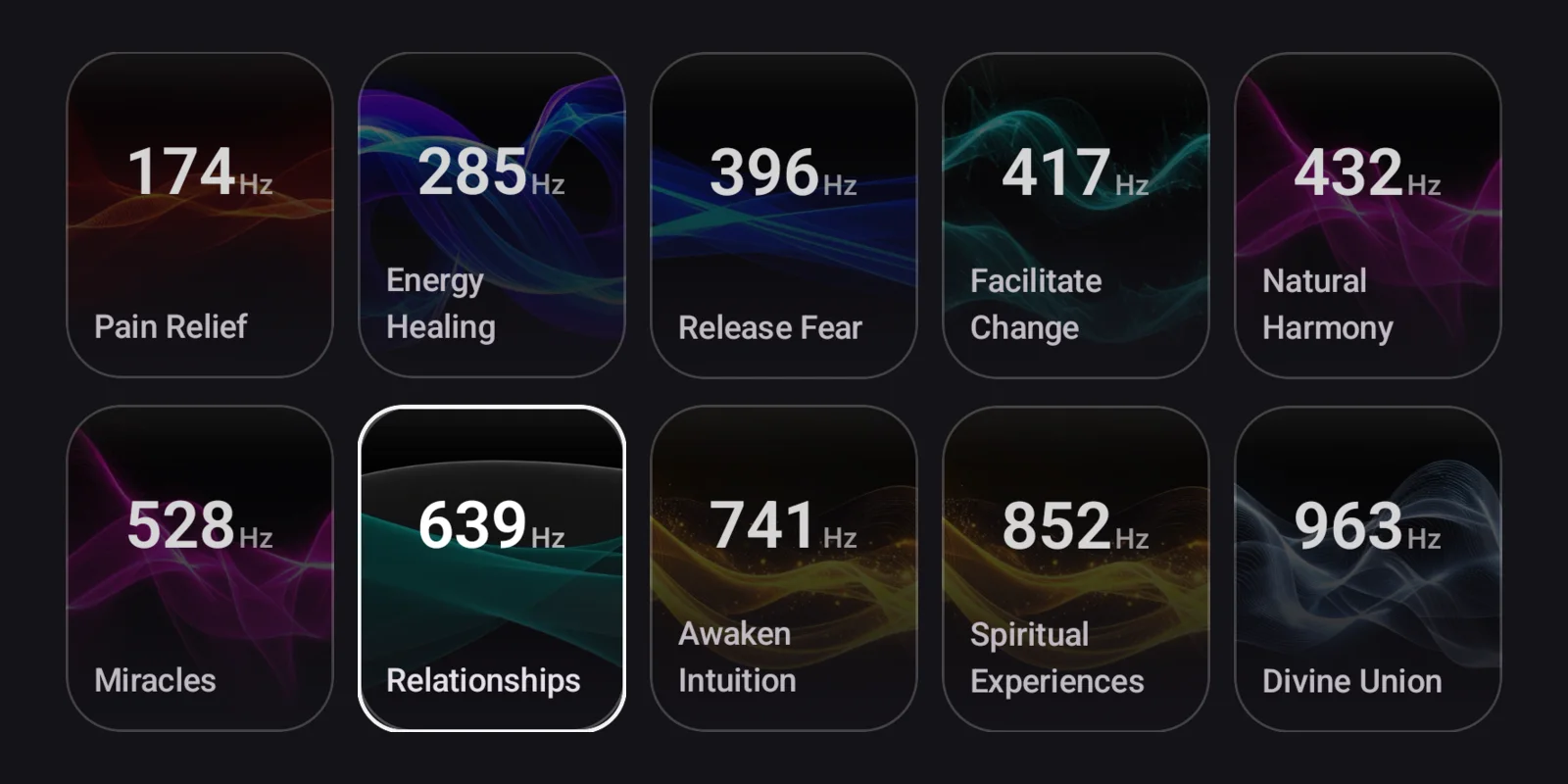
You will also find 639 Hz in the Brainwaves screen, where one-tap tiles run through every Solfeggio tone from 174 Hz to 963 Hz, 432 Hz included. If a single tone feels thin, the mixer can layer 639 Hz under rain or brown noise, and the timer fades both out together.
During onboarding you can pick "Healing frequencies" as a sound preference, and Momental builds that into a tuned sleep mix shaped around what calms you. It is one-tap simple, free to try, runs on iOS and Android, and includes a sleep timer. Learn more at momental.ai. Not sure whether you want tones or melodies? Our sleep music vs sleep sounds guide breaks down the difference.
Frequently Asked Questions
What is 639 Hz used for?
639 Hz is a Solfeggio tone traditionally used for themes of connection, relationships, and emotional balance. In sleep routines it works as a warm, soft wind-down sound. These meanings come from sound-healing tradition, not medical research, so use it if it helps you relax.
Is 639 Hz good for sleep?
It can be, if you like warm mid-range tones. 639 Hz is gentler and more musical than the high meditation frequencies and softer than pure grounding tones, which suits bedtime. Keep the volume low, use a 20 to 45 minute timer, and judge it by whether you settle faster.
What chakra is 639 Hz associated with?
In sound-healing tradition, 639 Hz is linked to the heart chakra and themes of connection and harmony. This is a symbolic association rather than a scientific one. For sleep, its value is the soft, warm character of the tone, not any specific chakra effect.
Do I need headphones for 639 Hz?
No. 639 Hz is a single fixed tone, so it plays fine on a speaker or phone without headphones. Binaural beats are the ones that require stereo headphones to work. Choose whatever setup keeps the sound quiet and comfortable across the night.