
396 Hz Frequency for Sleep: Benefits, Meaning & How to Use It
What 396 Hz is, its traditional meaning of releasing fear and tension, and how to use this grounding Solfeggio tone for sleep. Try it free in Momental.
By Momental · · 7 min read
396 Hz is one of the nine Solfeggio frequencies used in meditation, sound baths, and sleep routines. It is usually described as a grounding, root-chakra tone for "liberating fear and guilt," but those are traditional listening cues, not medical facts. For sleep, the question that matters is whether this low, steady tone helps your body wind down.
What is the 396 Hz frequency good for?
396 Hz is a low Solfeggio tone traditionally associated with releasing fear, guilt, and tension, and with a grounded, settled feeling. For sleep, people use it as a wind-down cue when the mind still feels loud. Evidence for specific effects is limited, so treat it as a calming background sound rather than a remedy.
What 396 Hz actually is
Each hertz is one full cycle of a sound wave per second, so a 396 Hz tone repeats 396 times a second. That lands very close to G4, the G just above middle C. On its own, without other notes around it, it reads as a calm, steady hum.
396 Hz is the point where the Solfeggio scale starts to leave the deep register behind. It still sounds warm, but it is clearer than 174 or 285 Hz, so it comes through well on a phone speaker at a low volume.
The traditional meaning of 396 Hz
In modern sound-healing tradition, 396 Hz is tied to the root chakra and the theme of "liberating fear and guilt." The idea is that a low, steady tone helps you feel anchored and physically grounded, which is why it shows up in releasing or letting-go practices.
It is among the lower tones in the Solfeggio set, so it sounds heavy and warm rather than bright. That low character is exactly why many people reach for it at night: a deep tone is less stimulating than a high one, and it tends to sit quietly behind your breathing.
These meanings are experiential cues, not proven effects. If "letting go" framing helps you relax, lean into it. If it feels like a stretch, ignore the symbolism and judge the tone purely on how calm it makes the room feel.
396 Hz benefits: what the research says
- Untested396 Hz releases fear or guiltThese are symbolic themes. Nobody has measured them.
- WeakA Solfeggio tuning lowers cortisolNine adults, one 5-minute session, and only 528 Hz was tested.
- PromisingRelaxing music as part of a bedtime routineThirteen trials suggest it may improve how well people feel they slept.
396 Hz has the longest pedigree of the lower tones. It opens the list of six frequencies, from 396 to 852 Hz, that Leonard Horowitz and Joseph Puleo promoted in a 1999 book, and its "fear and guilt" theme belongs to that same modern tradition. The Solfeggio name itself is far older: its ut, re, mi syllables come from the medieval hymn Ut queant laxis, which the monk Guido of Arezzo used to teach singing, long before anyone measured pitch in hertz. Research has not caught up with the lore. A 2018 pilot found lower cortisol in nine adults after 528 Hz music, but no study has looked at 396 Hz. The broader Cochrane review on music for insomnia is the better guide: calming music may help, and a quiet tone you like can play the same role.
396 Hz vs other low Solfeggio tones
Below 285 Hz sits 174 Hz, the lowest and heaviest tone, often used for deep grounding and body calm. Above 417 Hz, 528 Hz moves into a warmer, more musical mid range. If 396 Hz feels too plain on its own, the 174 Hz tone goes lower and heavier, while 528 Hz sits in a warmer, more musical range that some people find easier to listen to.
How to use 396 Hz for sleep
Keep the volume low. A grounding tone works best when it sits behind your breath rather than competing with it. If you catch yourself analyzing the pitch, turn it down or switch to a textured sound like rain or brown noise.
Use a timer. You do not need 396 Hz playing loudly all night. A 20 to 45 minute fade is enough for most people to settle. Start it at the same point in your routine each night so it becomes a cue that bedtime has begun.
Test before you decide. Try 396 Hz for three nights at the same volume and timer length before switching. The best signal is not the dramatic meaning, it is whether you stop thinking about the audio after a few minutes. If pure tones feel thin, compare them against textured options in our guide to the best sounds for deep sleep.
396 Hz in Momental
In Momental, 396 Hz lives in the "Healing Frequencies" section on the home screen, alongside named tracks like 174 Hz Piano, 285 Hz Harmony, and 528 Hz Healing Pad. The Brainwaves screen also has a one-tap 396 Hz tile. You pick the tone, set a timer, and let it fade into the background. No talking, no lessons.
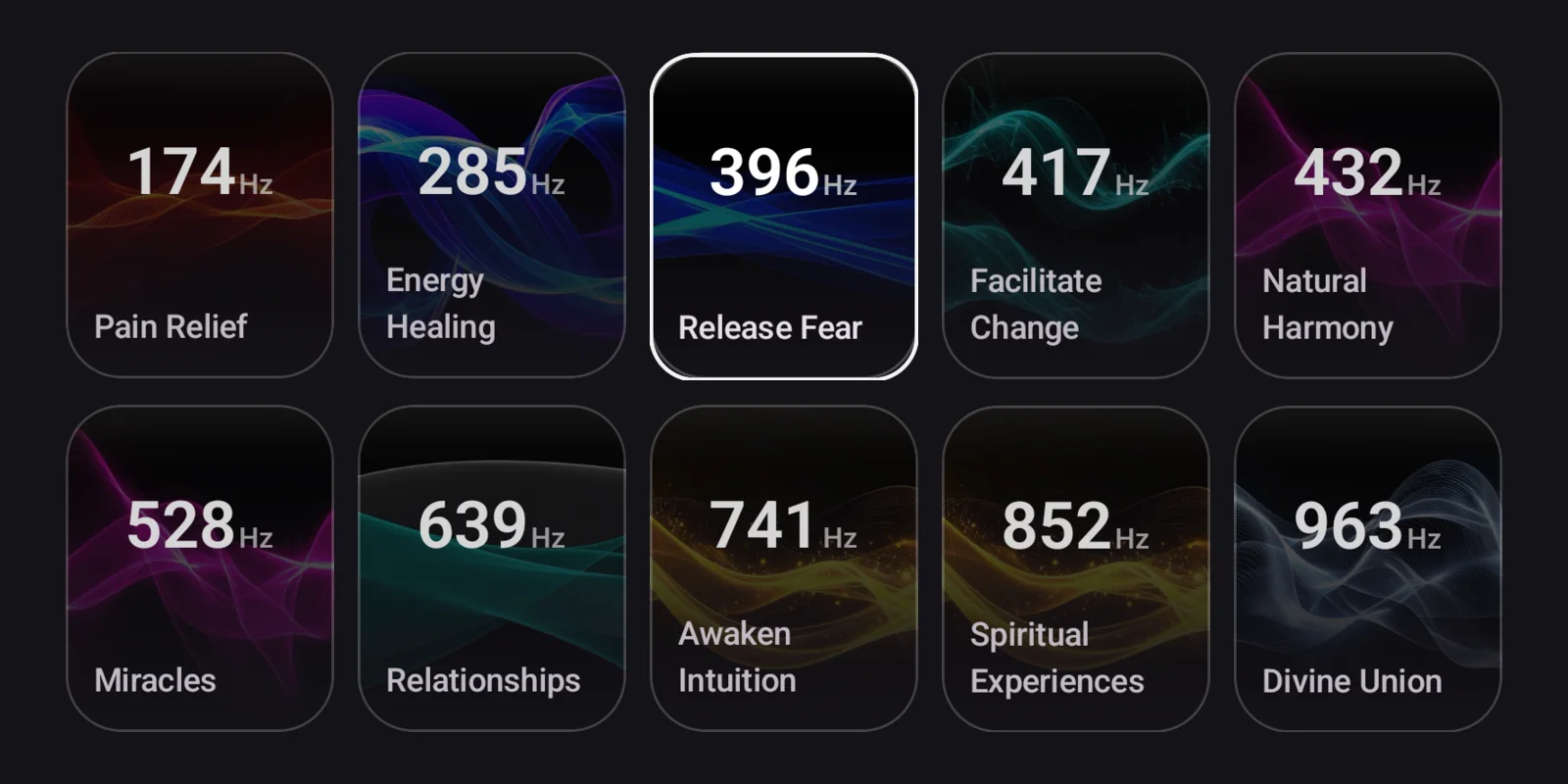
If the bare tone feels thin, the mixer lets you slide it under rain or brown noise so it becomes part of the room rather than a note you follow. During onboarding you can choose "Healing frequencies" as a sound preference, and Momental folds that into a tuned sleep mix built around what relaxes you. It is one-tap simple, free to try, works on iOS and Android, and includes a sleep timer so the tone winds down with you. Learn more at momental.ai. If you are unsure whether you prefer tones or melodies, our breakdown of sleep music vs sleep sounds can help you choose.
Frequently Asked Questions
What is 396 Hz used for?
396 Hz is a Solfeggio tone traditionally used as a grounding cue for "releasing fear and guilt" and for settling the body. In sleep routines it serves as a low, steady wind-down sound. These meanings are experiential traditions, not medical claims, so use it if it helps you relax.
Is 396 Hz good for sleep?
It can be, if you find low tones calming. 396 Hz is a lower Solfeggio frequency, so it sounds warm and heavy rather than stimulating, which suits bedtime. Keep the volume low, use a 20 to 45 minute timer, and judge it by whether you settle faster.
What chakra is 396 Hz associated with?
In sound-healing tradition, 396 Hz is linked to the root chakra and themes of grounding, safety, and letting go. This is a symbolic association, not a scientific one. For sleep, the practical value is its low, non-distracting character rather than any chakra effect.
Do I need headphones for 396 Hz?
No. 396 Hz is a single fixed tone, so it plays fine on a speaker or phone without headphones. That is different from binaural beats, which need stereo headphones to work. Pick whichever setup keeps the sound quiet and comfortable through the night.