
Delta Waves for Sleep: The Brainwaves Behind Deep Rest
Delta waves are the slow brainwaves of deep, restorative sleep. Learn what they do, how sound may support them, and how to get more. Try free in Momental.
By Momental · · 7 min read
Delta waves are the slow, deep brainwaves of the sleep that actually restores you. They rise in the first hours of the night, fade with age, and cannot be switched on by a sound. What sound can do is protect them, and there is some promising research on timed pink-noise pulses.
What Are Delta Waves?
Delta waves are the slowest brainwaves the human brain produces, oscillating at roughly 0.5 to 4 cycles per second (Hz). They are also the largest in amplitude. On an EEG, delta activity shows up as big, slow, rolling waves, and it dominates during the deepest stage of sleep, known as slow-wave sleep or deep sleep.
Brainwaves are not sounds. They are tiny electrical rhythms that an EEG picks up from the scalp, far too slow and too faint to hear. Sleep scientists score a 30-second stretch of sleep as slow-wave sleep once 20% or more of it is made of these delta waves.
When delta waves take over, your body is doing its most important overnight repair work. Growth hormone release is greatest during this stage, and deep sleep is closely tied to memory consolidation, clearing metabolic waste from the brain, and immune function. This is the sleep that leaves you feeling genuinely refreshed. Light sleep keeps you ticking over; delta-dominated deep sleep is what actually restores you.
Why Delta Waves Matter for Sleep Quality
You can spend eight hours in bed and still wake up exhausted if you are not getting enough deep, delta-rich sleep. Deep sleep is concentrated in the first half of the night, mostly in the first two sleep cycles, roughly the first three hours. Later cycles are lighter and richer in REM, the dreaming stage.
Deep sleep also naturally declines with age. Delta activity falls across the lifespan, with most of the drop seen by the mid-forties, which is one reason older adults often report less restorative sleep even when their total time in bed is unchanged.
A shortage of delta sleep is linked to poorer memory, weaker immune response, daytime grogginess, and reduced recovery from physical exertion. The goal of most "deep sleep" sound strategies is, ultimately, to protect and support this delta-stage sleep - either by reducing disruptions or by gently encouraging slow-wave activity.
Can Sound Increase Delta Waves?
There are two ways sound is used to support delta-stage sleep, and they work very differently:
1. Protecting deep sleep through masking. The simplest and most reliable approach. A steady background sound - a noise color or nature sound - masks sudden noises that would otherwise pull you out of deep sleep. You are not creating delta waves; you are preventing interruptions that cut them short.
2. Encouraging slow-wave activity directly. Some research suggests certain sounds can nudge the brain toward more delta activity. The strongest evidence is for pink noise: a 2012 study found it increased stable sleep time, and a 2017 Northwestern study played short pink-noise pulses timed to each slow wave. In 13 older adults, overnight word recall improved more than on a sham night. That lab setup tracks your EEG in real time, which a playlist or app cannot do.
- PromisingSteady sound protects deep sleepMasking covers the sudden noises that pull you out of slow-wave sleep.
- PromisingTimed pink-noise pulses boost slow wavesSmall lab studies with live EEG tracking. Not the same as a looping track.
- MixedDelta binaural beats deepen sleepA 2023 review of 14 studies found results that pointed both ways.
Binaural beats in the delta range (0.5-4 Hz) aim to do the same through brainwave entrainment. Each ear hears a slightly different tone, and the brain perceives a slow beat between them.
The evidence there is more mixed: a 2023 systematic review of 14 studies found five that supported entrainment, eight that contradicted it, and one with mixed results. Either way, the practical takeaway is consistent: steady, soothing, low-frequency-rich sound is your best bet.
Delta Waves vs Theta and Other Brainwaves
Brainwaves exist on a spectrum from fast and alert to slow and restful:
- Delta0.5–4 HzDeepest sleep, physical restoration
- Theta4–8 HzLight sleep, drowsiness
- Alpha8–13 HzCalm, relaxed wakefulness
- Beta13–30 HzActive, alert thinking
- Gamma30+ HzPeak concentration
- Delta (0.5-4 Hz) - deepest sleep, physical restoration. The target for deep rest.
- Theta (4-8 Hz) - light sleep, drowsiness, deep relaxation. The doorway into sleep.
- Alpha (8-13 Hz) - calm, relaxed wakefulness.
- Beta (13-30 Hz) - active, alert thinking.
- Gamma (30 Hz+) - peak concentration and high-level processing.
As you fall asleep, your brain travels down this ladder: from alert beta, through relaxed alpha, into drowsy theta, and finally into restorative delta. Good sleep sounds help you descend smoothly and stay in the lower bands.
How to Get More Delta Sleep
-
Protect your deep sleep window. Most delta sleep happens in the first few hours, so a consistent, early-enough bedtime matters more than total hours in bed.
-
Mask disruptions with steady sound. A noise color or nature soundscape covers sudden noises that fragment deep sleep. Pink noise is the most research-backed choice for slow-wave support.
-
Keep the room cool and dark. Core body temperature needs to drop for deep sleep to take hold; light and heat both suppress it.
-
Be consistent. Going to bed and waking at the same time strengthens the circadian signal that schedules your deep-sleep stages.
-
Avoid alcohol late. It can make you fall asleep faster but measurably suppresses delta-stage sleep in the second half of the night.
You can't force delta waves, but you can protect them: a consistent schedule, a cool dark room, and a steady masking sound like pink noise do most of the work.
Delta Waves in Momental
Momental has four delta presets in its Brainwaves screen, at 0.25, 1, 2 and 3.5 Hz, each playable as binaural beats through headphones or as isochronic pulses on any speaker. Pink noise and other deep, low-frequency soundscapes sit one tap away.
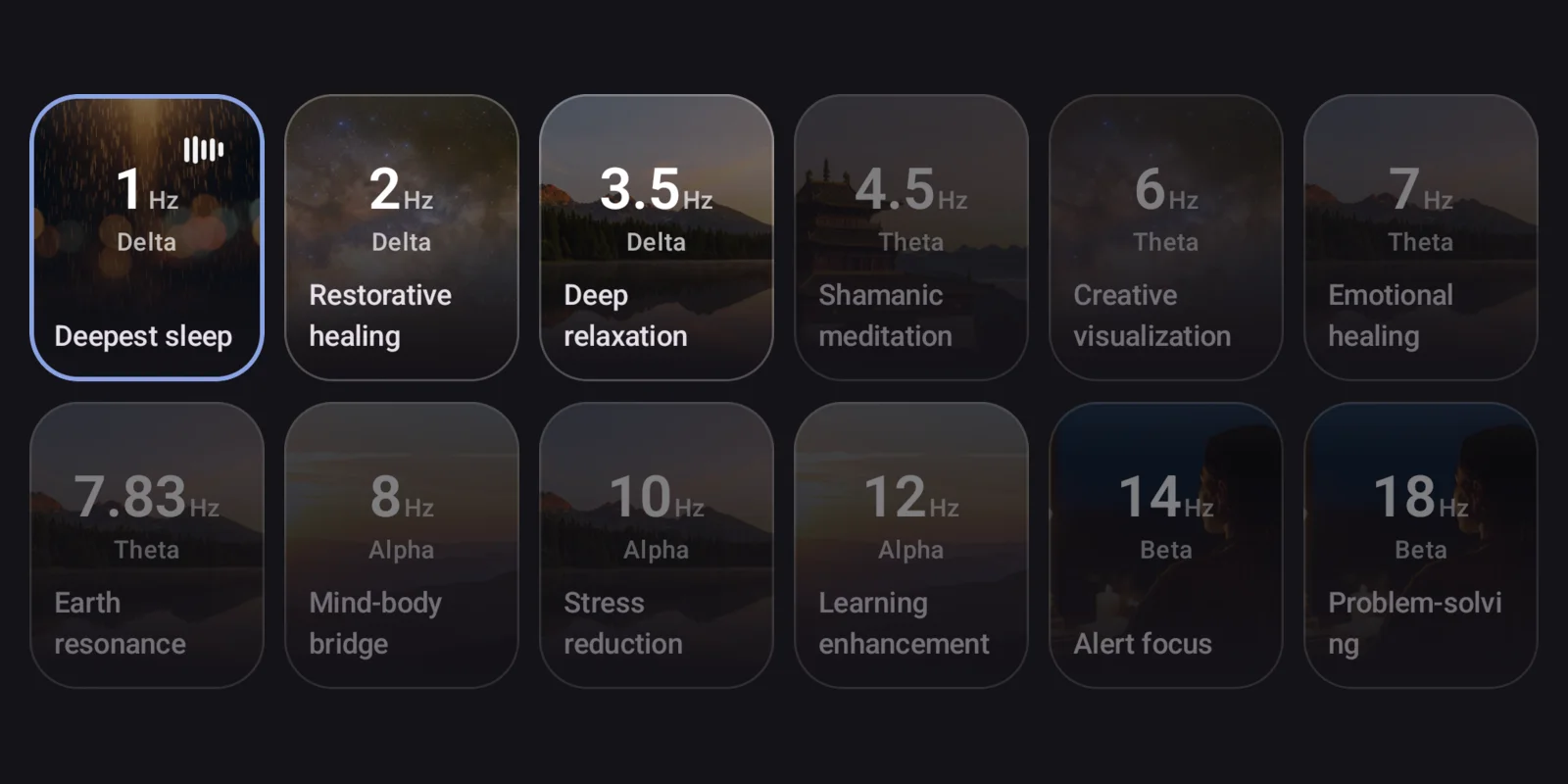
For the calmest setup, layer a quiet delta preset under pink noise in the mixer and set a sleep timer. No narration, just a low-effort way to protect the delta sleep that actually leaves you rested. For the full breakdown of which sounds support deep rest, see our guide to the best sounds for deep sleep.