
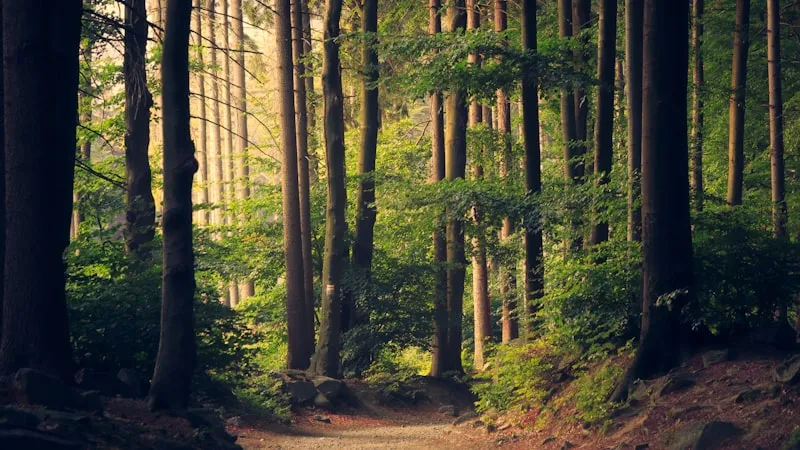
Forest Sounds for Sleep: A Calm Nature Soundscape for Bedtime
Forest sounds are useful when you want a bedtime sound that feels natural without becoming emotional or musical. Wind through trees, soft leaves, distant water, and low night ambience can make the room feel less sterile than pure noise.
The best forest sounds for sleep are subtle. They should suggest nature rather than recreate a busy outdoor scene. Too many birds, insects, footsteps, or branch cracks can become distracting once the room is dark.
Why Forest Sounds Feel Calming
Nature sounds often feel less mechanical than noise colors. A forest soundscape gives the brain a sense of space and softness, which can help after screen-heavy work or stressful indoor days. It is also less bright than white noise and less heavy than brown noise.
Forest audio is especially good for a wind-down routine. It can sit behind reading, stretching, journaling, or quiet breathing without asking you to follow a melody or a voice.
Forest Sounds vs Green Noise
Green noise is often described as nature-like because it emphasizes middle frequencies. Forest sounds are more literal: they may include wind, leaves, distant water, and outdoor texture. The choice depends on how much detail you want.
| Option | Character | Best for |
|---|---|---|
| Forest sounds | Organic outdoor ambience | Stress relief and bedtime atmosphere |
| Green noise | Smooth nature-like noise | More consistent overnight playback |
| Rain | Steady water texture | Masking and sleep routine |
| Ocean | Rhythmic natural sound | Breathing-like wind-down |
| Brown noise | Deep, non-natural sound | Racing thoughts and low-frequency comfort |
If real nature recordings keep grabbing your attention, switch to green noise. If green noise feels too plain, try a soft forest soundscape.
What to Avoid
For sleep, avoid forest tracks with:
- loud birds close to the microphone
- sudden animal calls
- footsteps, voices, or camp sounds
- dramatic stereo movement
- short loops with obvious repetition
Those details can be beautiful, but they make the recording more active. Sleep audio should become less noticeable as the night goes on.
How to Use Forest Sounds
Use forest sounds at the beginning of your nighttime routine, especially if you want to mentally separate from work. Keep the volume low and let the sound sit behind the room. If you wake easily, use a timer or switch to a smoother sound like rain or green noise for all-night playback.
Forest sounds are best when you want nature without narration. If you need stronger masking, choose rain or waterfall instead.
Bottom Line
Forest sounds can make bedtime feel calmer and more spacious. Choose low-detail recordings, avoid sudden nature peaks, and use them as a gentle transition into sleep. For related options, compare nature sounds for relaxation, green noise for sleep, and sleep sounds for stress.