

What Is Green Noise?
A soft mid-range rush, like a distant waterfall: softer than white noise, lighter than brown. Hear it free in your browser.
Updated
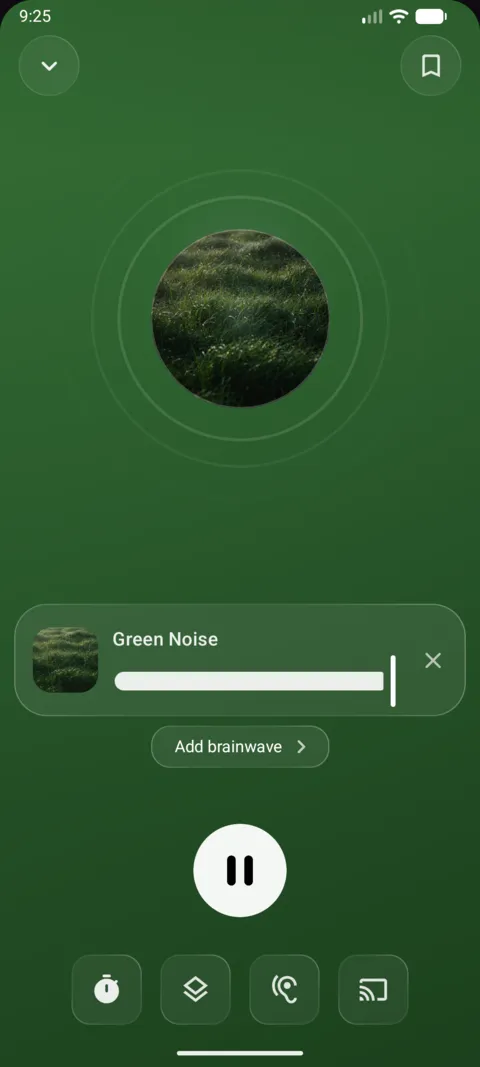
Green noise is often described as the most nature-like noise color. It is not as technically standardized as white, pink, or brown noise, but in sleep apps it usually means a sound profile that emphasizes the middle of the frequency range and avoids extreme hiss or heavy rumble. Because there is no strict engineering definition, green noise can vary between apps, but the core idea stays the same: a balanced, organic-sounding texture.
That makes green noise feel like a soft forest, distant waterfall, wind in trees, or steady stream. It is a useful middle ground for people who want masking but do not want a mechanical fan sound. If you have ever felt that white noise sounds too synthetic and brown noise sounds too heavy, green noise may be the profile that finally clicks.
What Green Noise Sounds Like
Green noise sits near the center of the spectrum. It has less high-frequency bite than white noise and less low-frequency weight than brown noise. The result is rounded and organic. Many listeners describe it as the sound equivalent of sitting in a quiet park — present but unobtrusive.
It can be especially comfortable for people who respond well to nature sounds but still want something more even than a realistic forest track. Real nature recordings can include birds, branches, insects, or sudden water changes — any of which can pull you out of a drowsy state. Green noise keeps the nature feeling while staying predictable, which makes it a strong candidate for uninterrupted overnight playback.
When Green Noise Helps
Use green noise when:
- white noise feels too bright
- brown noise feels too heavy
- you like forest, wind, and stream sounds
- you want a calm background for reading before sleep
- you need light masking without a strong synthetic texture
Green noise is not the strongest masker. If your main issue is loud neighbors or traffic spikes, white noise may cover more. If your issue is mental overstimulation, brown noise or pink noise may feel more settling. Green noise is best when comfort matters more than maximum coverage. It excels in quieter environments where you want a gentle audio backdrop rather than a wall of sound.
Strengths
- Nature-like character without unpredictable peaks from real recordings
- Comfortable mid-range balance that avoids both hiss and heavy rumble
- Pleasant for wind-down routines like reading or stretching before bed
- Works well at very low volumes because it does not rely on extremes
Limitations
- Not standardized — can sound different from one app to another
- Weaker masking power than white noise for loud, sharp interruptions
- Less research available compared to white or pink noise
- May feel too subtle for people who need strong sound coverage
Green Noise Compared
| Noise color | Character | Try it if |
|---|---|---|
| White | Bright, static-like | You need strong masking |
| Pink | Balanced, rain-like | You want a soft all-night sound |
| Green | Mid-range, nature-like | You want gentle masking with an outdoor feel |
| Brown | Deep, rumbling | You want low, calming pressure |
| Blue | Bright, crisp | You need short focus energy, not bedtime softness |
How to Use Green Noise
Green noise works well in a wind-down routine. Start it while you dim lights, read, stretch, or put your phone away. Let it become part of the room instead of something you actively listen to. The goal is to create a consistent sensory cue that tells your brain the day is winding down. For more options ranked by evidence, see our best sounds for deep sleep guide.
If you use a timer, set a longer fade. Abrupt silence can be more noticeable with mid-range sounds than with deeper brown noise. A gradual fade over five to ten minutes lets the sound dissolve naturally without pulling you back to wakefulness.
Best for
Green noise is best for sleepers who like nature sounds but want a smoother, more consistent loop than a real-world recording.
Bottom Line
Green noise is a comfortable bridge between pure noise and nature ambience. It is not magic, and definitions vary by app, but it is worth trying if white noise is too sharp and brown noise is too deep. For nearby options, compare pink noise, white noise, and nature sounds.