
432 Hz Music for Sleep: Natural Tuning vs 440 Hz
432 Hz is an alternative musical tuning many find calmer than standard 440 Hz. Learn what it is, the 432 vs 440 debate, and how to use it for sleep. Try free in Momental.
By Momental · · 7 min read
432 Hz is a tuning standard, not a single tone. Where most modern music tunes its reference note A to 440 Hz, 432 Hz music shifts everything slightly lower, which some people describe as softer or more "natural." Unlike the pure tones in the Solfeggio set, 432 Hz applies to whole melodies, so it fits people who want music rather than a steady drone.
Is 432 Hz music good for sleep?
432 Hz music can be good for sleep because it is full melodic music tuned slightly lower than standard pitch, which some listeners find warmer and more relaxing. The difference from 440 Hz is subtle and not proven by science, so the practical test is whether the gentler tuning helps you unwind and stop paying attention to the audio at bedtime.
The "natural tuning" label comes from listener tradition and folklore about 432 Hz feeling more in tune with nature. Those ideas are not settled science, and 432 Hz will not heal anything. What it can do is give you melodic, low-stimulation music to fall asleep to, which is a meaningful difference from a bare frequency tone.
What 432 Hz actually is
Musicians tune to one reference note and build every other note from it. That reference is the A above middle C, written A4. Since a conference recommended it in 1939, the usual choice has been A = 440 Hz, meaning the string or air column vibrates 440 times a second. "432 Hz music" simply sets that same A to 432 vibrations instead.
That is the whole difference. Lowering A by 8 Hz lowers every note by the same ratio, about 1.8%, or 31.8 cents in musical terms: roughly a third of a semitone. Melody, harmony, and rhythm stay exactly the same. The piece just sits a touch lower, a shift many listeners only notice when the two versions play back to back.
What the research says about 432 Hz
- Untested432 Hz is in tune with natureA belief from listener folklore, not something a study has confirmed.
- WeakRetuned music changes stress markersThe nearest lab data is a 9-person pilot comparing 528 Hz music with 440 Hz music.
- PromisingGentle music helps sleepA Cochrane review of 13 trials found music may improve self-reported sleep.
Tuning research is thin. In a 2018 pilot, nine adults heard five minutes of piano music at 528 Hz and at 440 Hz; cortisol fell significantly only after the 528 Hz version, but a group that small proves little, and 432 Hz was not tested. The firmer evidence is about music as a whole: a 2022 Cochrane review found calming music may help people sleep better by their own reports. In other words, choosing gentle music matters far more than choosing its tuning.
432 Hz vs 440 Hz and other options
The 432 versus 440 debate is mostly about subtle warmth and personal preference. Here is how 432 Hz music compares to other common sleep audio choices.
| Sound | What it is | Best bedtime role |
|---|---|---|
| 432 Hz music | Music tuned ~8 Hz below standard | Warm, melodic wind-down |
| 440 Hz music | Standard-tuned music | Familiar everyday listening |
| 528 Hz tone | Single warm Solfeggio tone | Meditative, steady drone |
| Binaural beats | Two close tones, one per ear | Focused relaxation with headphones |
| Brown noise | Deep textured rumble | Masking outside noise all night |
If you want to understand how pure tones and layered beats differ, read our guide on binaural beats vs solfeggio. And if you prefer a single steady tone over full music, the 528 Hz frequency is the most popular starting point.
How to use 432 Hz music in Momental
Momental keeps things one-tap simple. During onboarding you can choose "Healing frequencies" as a sound preference, and the app builds a calm sleep mix around warm, low-stimulation audio. From the home screen, the Healing Frequencies section lets you start a track instantly without setup. In the Brainwaves screen, 432 Hz also has its own tile, Natural Harmony, alongside the Solfeggio tones from 174 Hz to 963 Hz.
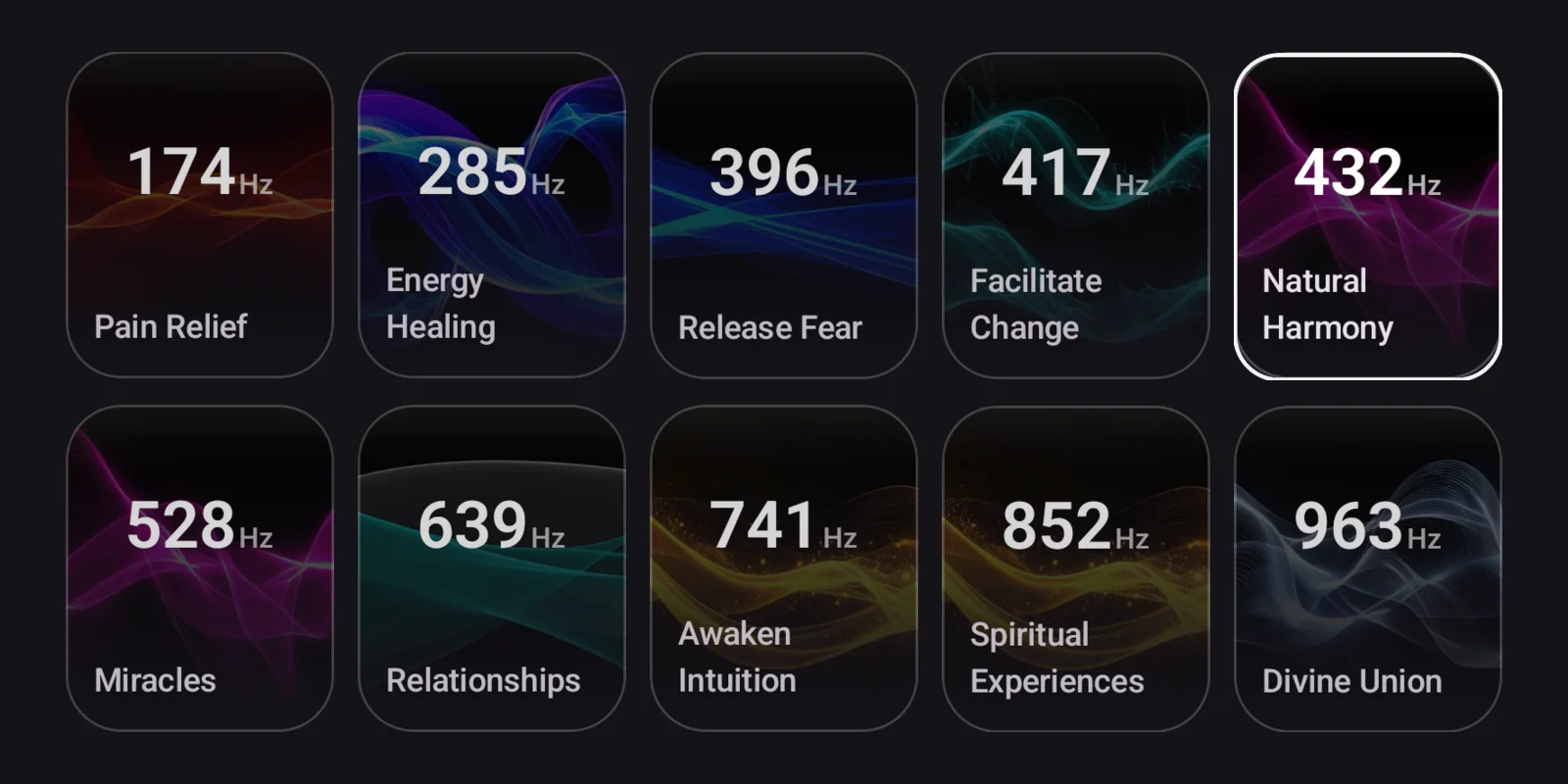
- Tap a track in the Healing Frequencies section, or the 432 Hz tile, to start playing right away.
- Keep the volume low, so the music sits behind your breathing rather than over it.
- Set the sleep timer (20 to 45 minutes works for most people).
- Let the melody fade out as you drift off. No talking, no complexity.
Momental is free to try on iOS and Android, so you can test whether 432-style warmth helps you settle tonight. If music keeps you mentally engaged, switch to a steady tone or a textured sound instead, or layer the tone under rain in the mixer. For more on choosing between melodies and plain tones, see sleep music vs sleep sounds.
Frequently Asked Questions
What is the difference between 432 Hz and 440 Hz?
440 Hz is the modern standard tuning reference for the note A, while 432 Hz tunes everything about 8 Hz lower. The result is music pitched slightly down, which some listeners describe as warmer or calmer. The difference is subtle and personal rather than scientifically proven.
Why do people say 432 Hz is "natural tuning"?
The "natural tuning" idea comes from folklore that 432 Hz aligns better with patterns in nature and feels more harmonious. This is listener tradition, not settled science. For sleep, what matters is not the story but whether the gentler tuning actually helps you relax.
Is 432 Hz music better than 528 Hz for sleep?
They serve different needs. 432 Hz is full melodic music, while 528 Hz is a single steady tone. If you like falling asleep to melodies, 432 Hz music may suit you better; if you prefer a meditative drone in the background, 528 Hz may work better. Try both and keep whichever lets you stop noticing the sound.
Do I need headphones for 432 Hz music?
No. Unlike binaural beats, 432 Hz music does not depend on separate left and right tones, so it plays fine on a speaker. Keep the volume low and use a sleep timer. If you want headphone-specific effects, binaural beats are the option that requires stereo listening.