
528 Hz Frequency for Sleep: The Love Frequency, Explained
528 Hz is the best-known Solfeggio tone, called the love or miracle frequency. Learn what it is, how it compares to 432 Hz, and how to use it for sleep. Try free in Momental.
By Momental · · 8 min read
528 Hz is the most-searched Solfeggio frequency, often tied to words like love, transformation, and repair. It sits in a gentle, musical range that many sleepers find easier to listen to than the very low or very high tones in the full Solfeggio set. The honest test for sleep is simple: does this tone help your body settle?
Is 528 Hz good for sleep?
528 Hz can be good for sleep because it sits in a warm, musical mid-range that is easy to listen to without feeling sharp or heavy. Traditionally called the "love frequency," it is associated with calm and emotional softness. The science behind those labels is unsettled, so the practical test is whether the steady tone helps you relax and stop thinking about the audio.
The "miracle tone" nickname comes from modern sound-healing tradition, where 528 Hz is linked to repair, renewal, and warmth. These are listening cues, not medical facts, and 528 Hz will not heal or cure anything. What it can do is give your mind a single, steady, non-distracting sound to settle into at bedtime.
What 528 Hz actually is
Frequency is just a count. A 528 Hz tone makes the air vibrate 528 times each second, and the faster that vibration, the higher the note you hear. 528 Hz sits a hair above C5, the C one octave over middle C. That puts it right in the zone where melodies, flutes, and many singing voices live, which is why it sounds musical instead of buzzy or shrill.
Because it is near the middle of the Solfeggio list, 528 Hz avoids both extremes: it lacks the heavy hum of 174 Hz and the glassy edge of 963 Hz. For many sleepers, that middle ground is the easiest place to start.
Is 528 Hz a brainwave?
No. A 528 Hz tone is an ordinary sound, the kind your ears pick up through the air. Brainwaves are something else entirely: slow electrical patterns that an EEG records from the scalp, all far below the lowest note you could ever hear. Playing 528 Hz does not tune your brain to 528 Hz.
Electrical rhythms of the brain, read by an EEG. You cannot hear them.
Pressure waves in the air that reach your ears. 528 Hz lives here.
Audio made to target brainwaves uses a trick instead. Binaural beats send one tone to each ear, say 200 Hz on the left and 204 Hz on the right, and the brain perceives the 4 Hz gap as a slow beat. Whether the brain actually follows that beat is still debated: a 2023 systematic review of 14 studies found mixed results.
528 Hz benefits: what the research says
- Untested528 Hz repairs DNAA popular sound-healing claim with no clinical evidence behind it.
- Weak528 Hz music lowers stressNine adults: cortisol fell after five minutes of 528 Hz music but not 440 Hz. A tiny pilot.
- PromisingCalming music helps you sleepA Cochrane review of 13 trials found music may improve self-reported sleep.
528 Hz has at least one small human study behind it. In a 2018 pilot, nine healthy adults listened to five minutes of piano music tuned to 528 Hz and, on another day, to 440 Hz. After the 528 Hz session, salivary cortisol, a stress hormone, dropped and oxytocin rose; after the 440 Hz session, neither change was significant. The authors never tested the two tunings directly against each other, and nine people cannot settle anything, so treat it as an interesting hint rather than proof.
The sturdier finding is about music in general. A 2022 Cochrane review of 13 trials concluded that listening to music may improve how well people with insomnia say they sleep. If 528 Hz is the music that relaxes you, that is a reasonable reason to play it.
528 Hz compared to other tones
528 Hz sits between the grounding low tones and the brighter higher ones, which is part of why so many people reach for it first. Here is how it compares to common alternatives for sleep.
| Sound | Character | Best bedtime role |
|---|---|---|
| 174 Hz | Deep, low, grounding | Heavy body calm, low stimulation |
| 396 Hz | Soft, releasing | Letting go of a mentally loud day |
| 528 Hz | Warm, musical, mid-range | Easy, pleasant wind-down tone |
| 432 Hz tuning | Calmer-perceived musical tuning | Music-based, melodic listening |
| Brown noise | Deep rumble, textured | Masking outside noise all night |
If pure tones feel too plain, you may prefer the textured masking of brown noise or a layered soundscape instead. And if you are weighing musical tunings against bare tones, see how 432 Hz music compares.
How to use 528 Hz in Momental
Momental keeps frequency listening simple. During onboarding you can pick "Healing frequencies" as a sound preference, and the app tunes a calm sleep mix around tones like 528 Hz. On the home screen, the Healing Frequencies section gives you named tracks you can start with one tap.
- Open the Healing Frequencies section and tap a 528 Hz track to start instantly.
- Set the volume lower than you think you need, so the tone sits behind your breathing.
- Turn on the sleep timer (20 to 45 minutes is plenty for most people).
- Let it fade into the background. No talking, no lessons.
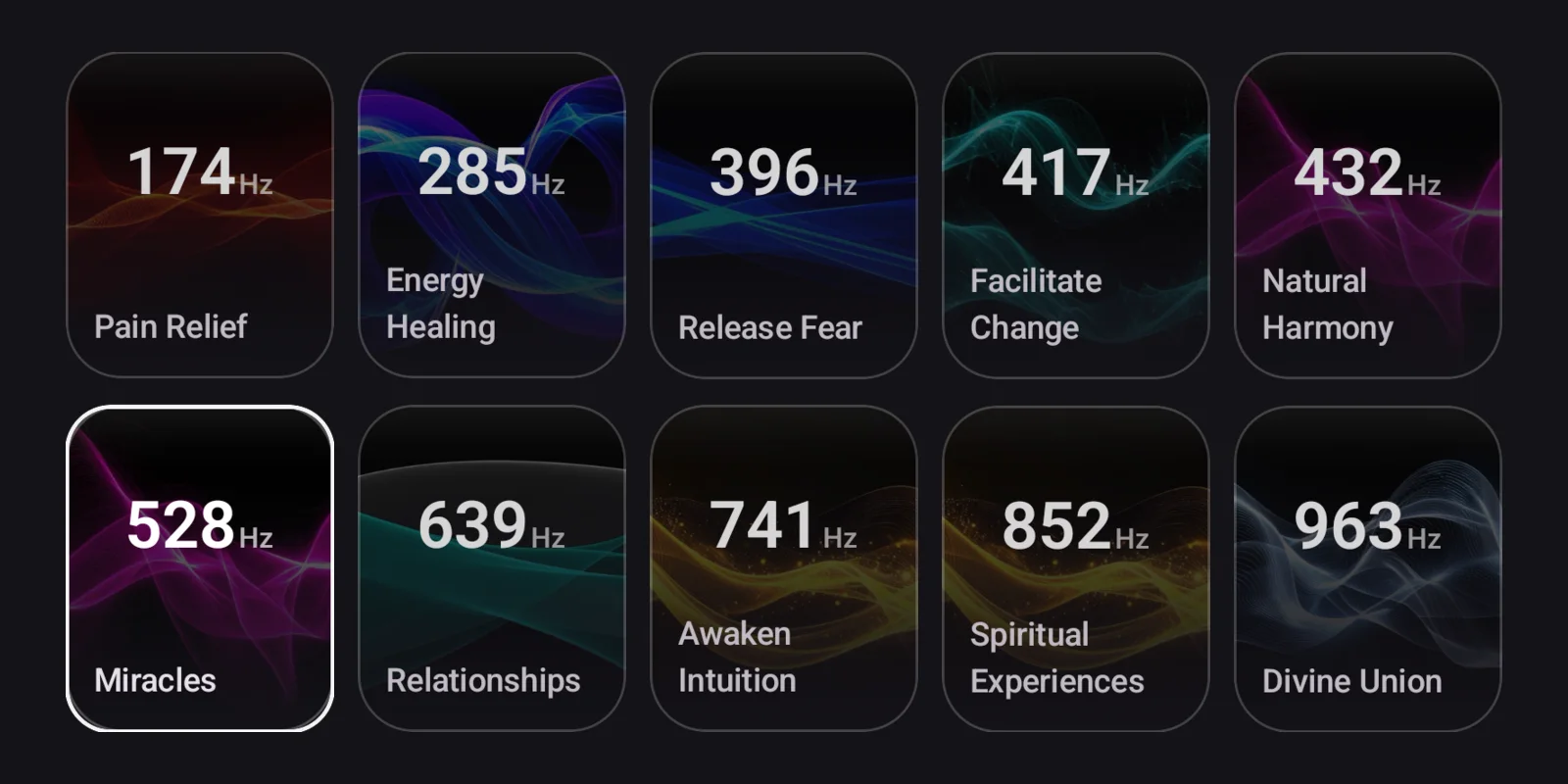
Prefer a bare tone? The Brainwaves screen holds one-tap Solfeggio tiles from 174 Hz to 963 Hz, 432 Hz included, so a clean 528 Hz is one tap away. For something more musical, the 528 Hz Healing Pad and 528 Hz Heart Warming tracks wrap the tone in soft sound, and the mixer lets you lay either one under rain or brown noise.
Momental is free to try on iOS and Android, so you can test 528 Hz tonight without committing. If it feels sharp or you keep analyzing the pitch, lower the volume or switch to a softer track. For a broader comparison of tones versus melodies, see sleep music vs sleep sounds.
Frequently Asked Questions
What is the 528 Hz frequency used for?
528 Hz is used in meditation, relaxation, sound baths, and sleep routines as a steady, warm tone. In sound-healing tradition it is called the "love" or "miracle" frequency and linked to repair and emotional softness. Those meanings are traditional cues, not proven medical effects.
Is 528 Hz better than 432 Hz for sleep?
Neither is universally better. 528 Hz is a single warm Solfeggio tone, while 432 Hz is an alternative musical tuning applied to whole songs. Many people find 432 Hz music more melodic and 528 Hz more meditative, so the best choice is whichever one helps you stop thinking about the audio and drift off.
Can I play 528 Hz all night?
You can, but you usually do not need to. A 20 to 45 minute sleep timer is enough to help most people settle, and it saves battery. If you prefer continuous sound for masking, a textured option like brown noise often works better than a pure tone for all-night playback.
Does 528 Hz have real health benefits?
The dramatic claims around 528 Hz come from sound-healing tradition, not settled science, and it will not cure anything. Its real value at bedtime is practical: a steady, pleasant sound can help you relax and build a calmer wind-down routine. Use it if it helps you settle, and skip it if it feels distracting.