
285 Hz Frequency for Sleep: The Restoration Tone (2026)
285 Hz is the Solfeggio restoration tone, a low reset that feels calmer than music and warmer than plain noise. Learn how to use it. Try free in Momental.
By Momental · · 7 min read
What is the 285 Hz frequency, and is it good for sleep?
285 Hz is one of the lower Solfeggio tones, traditionally associated with restoration, renewal, and a gentle sense of recovery. It is low enough to feel grounding without the heavy weight of the very bottom tones. For sleep, it works nicely as a soft reset: something calmer than music but warmer and more soothing than plain noise.
What 285 Hz actually is
Frequency is simply a count. A 285 Hz tone repeats its wave 285 times every second, which puts it between C♯4 and D4 on a piano, just above middle C. It is not tuned to any note on a standard keyboard, so it sounds like a plain, steady hum rather than part of a song.
That middle-low position is what gives 285 Hz its character. It has more body than the high tones, yet it is clear enough to sound full on a modest bedside speaker, where the very lowest tones start to lose weight.
What "restoration" and gentle reset mean for 285 Hz
In sound-healing tradition, 285 Hz is the "restoration" tone, the frequency people play when they feel worn down and want to reset. It is described in terms of renewal, recovery, and returning to a calm baseline. Those are listening cues that set a mood, not claims about your body.
There is no settled science behind the meaning, and 285 Hz will not cure, heal, or repair anything. What people actually report is straightforward: a low, warm tone that feels like settling back into neutral after a draining day. If the label helps you frame the moment as recovery time, use it, then judge the sound on whether it genuinely helps you relax. For where 285 Hz sits among all nine tones, see the Solfeggio frequencies for sleep guide.
285 Hz benefits: what the research says
- Untested285 Hz restores or repairs the bodyNo published trial has looked at this tone.
- WeakTuning music to a Solfeggio number shifts stress hormonesOne tiny pilot exists, and it used 528 Hz, not 285 Hz.
- PromisingSoft music helps people who sleep poorlyCochrane pooled 13 trials and found sleep quality may improve.
The restoration label is younger than it sounds. The modern Solfeggio list began with a 1999 book by Leonard Horowitz and Joseph Puleo, which promoted six tones from 396 to 852 Hz; 285 Hz was attached to the set afterwards. The only lab test of a Solfeggio tuning is a 2018 pilot with nine adults and 528 Hz music. What does hold up is the broader finding from the Cochrane review on music for insomnia: calm, slow music may help people feel they slept better. Treat 285 Hz as one gentle way into that habit.
Why 285 Hz sits between music and plain noise
Sleep audio tends to fall into two camps. Music has melody and movement, which can be beautiful but also engaging enough to keep you listening. Plain noise, like white or brown, is steady and non-distracting but can feel a little flat or mechanical. A low Solfeggio tone like 285 Hz threads the gap.
It has the warmth and body of a musical note without a melody to follow, so there is nothing for your attention to track, and it has more character than a pure hiss, so it does not feel clinical. That in-between quality is exactly why it suits a reset night: calm and warm, but quiet enough to disappear. If you decide you want more masking texture, a low tone layers beautifully under brown noise.
How to use 285 Hz for a recovery night
- Reach for it on drained days. 285 Hz is a good default when you feel frazzled and just want something warm and undemanding.
- Keep the volume low. Low tones can feel heavy if played too loud. Aim for a gentle presence you could talk over.
- Use a decent speaker if you can. Low frequencies come through better on a bedside speaker than a phone, though a whisper-quiet phone tone still works.
- Set a timer, or let it run softly. 20 to 45 minutes suits most people. Because it is low and steady, 285 Hz is also gentle enough for longer playback if you prefer.
- Give it a few nights. Like any sleep cue, it works best once your brain builds the association. Try it for several nights before deciding.
285 Hz compared with the neighboring low tones
285 Hz sits just above the lowest Solfeggio tone and just below the change and release tones.
One step further up, 417 Hz is the change tone, a warm cue for a new bedtime routine. If 285 Hz feels too light, drop to the heavier 174 Hz for more grounding. If you want a tone tied to a routine you are trying to change, step up to 417 Hz or the release tone 396 Hz. None of these are sedatives, and the best one is simply whichever you stop noticing first.
Playing 285 Hz in Momental
Momental gives you two ways to reach 285 Hz. The real-time frequency tone generator includes a Solfeggio mode with all nine tones, so you can generate a clean 285 Hz and set the volume yourself. There are also pre-rendered tracks built around it, 285 Hz Harmony and 285 Hz Ambient, which add a soft pad around the tone so it feels warmer than a bare sine.
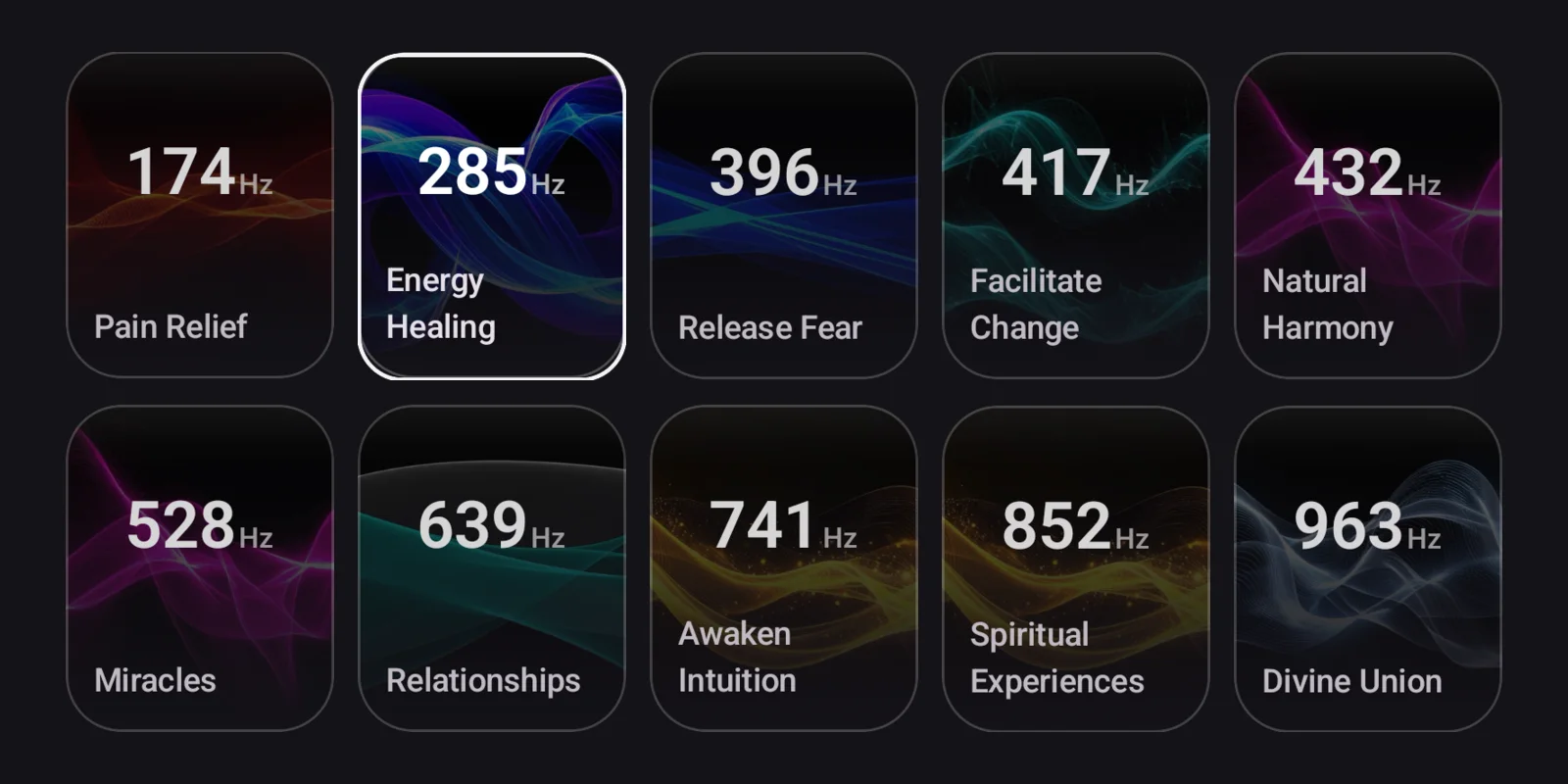
For a full reset soundscape, use the mixer: keep 285 Hz low and layer it under rain or brown noise, then set a sleep timer. The tone provides the warm, restful foundation while the texture masks sudden noise. Let it become a quiet reset at the end of the day. No talking, no complexity, just a gentle tone to restore a calm baseline.
Frequently Asked Questions
Is 285 Hz good for sleep?
285 Hz is a warm, low, undemanding tone that suits sleep well, especially on nights when you feel drained and want a gentle reset. It is calmer than music and warmer than plain noise, so there is nothing for your attention to track. Keep the volume low and it settles easily into the background.
What does 285 Hz mean?
Traditionally, 285 Hz is the restoration tone, linked with renewal and recovery. Those meanings are sound-healing listening cues, not medical facts, and the tone will not cure or repair anything. In practice, people simply play it to relax and reset after a long or stressful day.
Do I need headphones for 285 Hz?
No. 285 Hz is a single fixed tone and plays fine on a speaker or phone. A speaker with decent bass response can make a low tone sound fuller, but it is not required. Headphones are only needed for binaural beats, which use two slightly different tones, one per ear.
Can I play 285 Hz all night?
You can. Because it is low and steady, 285 Hz is gentle enough for longer playback without the high-frequency edge that causes listener fatigue. That said, a 20 to 45 minute timer is enough for most people to fall asleep, and it also saves battery.