
White noise
Pink noise
White Noise vs Pink Noise
White noise is bright, like a fan or static. Pink noise is softer and deeper, like steady rain. Compare them, then try both free in your browser.
Updated
 White noise
 Pink noise
- Sounds like
- TV static, a fan, a steady hiss
- Steady rain, wind through leaves
- Frequency profile
- Flat: every frequency at equal power
- 1/f: about 3 dB quieter per octave, so more bass
- Masking
- Excellent, covers sharp, sudden noises
- Good, a little weaker at high frequencies
- All-night comfort
- Can feel harsh over time
- Generally more pleasant
- Evidence
- Strong, several meta-analyses
- Moderate, a growing body of research
- Best for
- Blocking disruptive noise
- Soft, all-night listening
Understanding the Frequency Spectrum
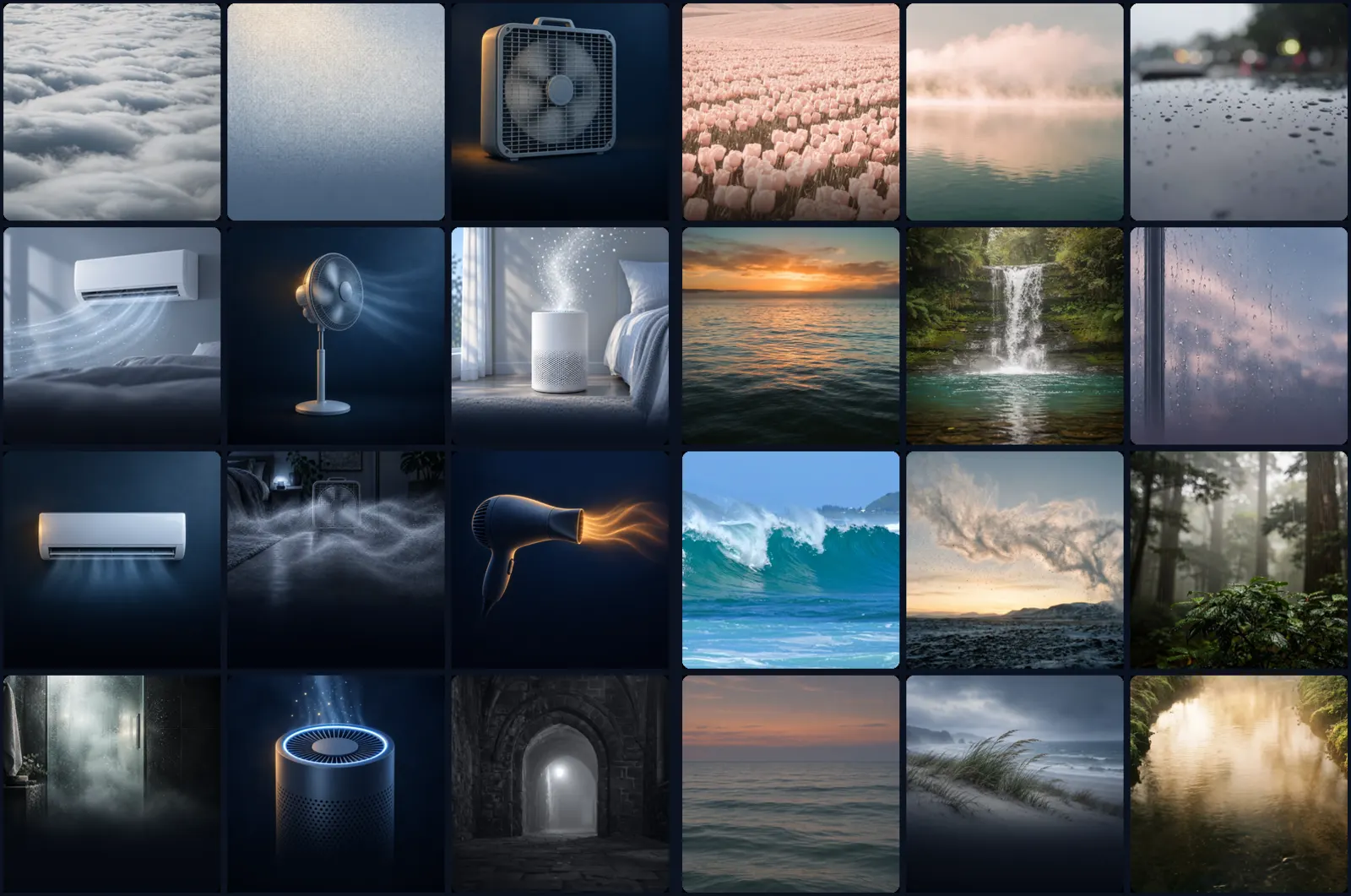
All noise "colors" are named by analogy to light. Just as white light contains all visible wavelengths equally, white noise contains all audible frequencies at equal power. The result is a bright, hissing sound - similar to TV static, a fan, or an air conditioner.
Pink noise also contains all frequencies, but the power decreases as frequency increases. Specifically, pink noise drops by about 3 decibels per octave. This means bass frequencies are more prominent and treble frequencies are softer. The result sounds deeper and more natural - like steady rainfall, wind through leaves, or a distant waterfall.
In technical terms, white noise has a flat power spectral density, while pink noise has a power spectral density inversely proportional to frequency (1/f). This 1/f pattern is remarkably common in nature - it appears in heartbeat rhythms, neural activity, river flow patterns, and even in the timing of musical compositions.
How White Noise Affects the Brain
White noise is primarily a masking agent. Because it covers the entire frequency spectrum with equal energy, it effectively drowns out environmental sounds that would otherwise disrupt sleep - a car horn, a partner snoring, a dog barking.
A 2005 study in Sleep Medicine tested white noise in a hospital ICU, one of the most sleep-hostile environments. Patients exposed to white noise had significantly fewer arousals per hour than the control group. A larger 2021 meta-analysis confirmed that white noise reduces sleep onset latency (the time it takes to fall asleep) and decreases nighttime awakenings in noisy environments.
White noise works best when there is external noise to mask. In a quiet bedroom, it may feel unnecessarily harsh - some people describe it as "aggressive" or find the high-frequency content (the hissing quality) uncomfortable over long periods.
How Pink Noise Affects the Brain
Pink noise does something white noise does not: it appears to directly influence sleep architecture, particularly deep sleep (slow-wave sleep).
A landmark 2012 study published in the Journal of Theoretical Biology found that pink noise played during sleep increased slow-wave activity by 23% and improved memory recall the following day by 26%. The researchers hypothesized that the 1/f frequency pattern of pink noise resonates with the natural oscillation patterns of the sleeping brain.
A 2017 study at Northwestern University replicated and extended these findings. They used pink noise pulses timed to the peaks of slow-wave oscillations and found significant improvements in both deep sleep quality and next-day memory performance in older adults - a group that typically experiences declining deep sleep.
Pink noise also provides good sound masking, though not as aggressively as white noise. Because the high frequencies are quieter, pink noise is generally perceived as more pleasant and less fatiguing for all-night listening.
Which one should you try tonight?
Street noise, thin walls or a snoring partner
White noise covers the most. Its even hiss masks sharp, sudden sounds best.
White noise for sleepWhite noise sounds harsh or hissy
Pink noise keeps the masking but softens the highs, so it is easier to leave on all night.
Pink noise for sleepYou want something deeper still
Brown noise drops even more of the treble for a low, rumbling sound.
Brown noise for sleepYou like rain, wind or forest sounds
Green noise sits in the middle of the range and feels the most like nature.
Green noise for sleepWho Should Use Which
Choose White Noise If:
-
You live in a noisy environment (busy street, thin apartment walls, snoring partner)
-
You are a light sleeper who wakes up easily from sudden sounds
-
You already enjoy the sound of fans or air conditioners at night
-
Your primary goal is blocking external noise rather than optimizing sleep depth
Choose Pink Noise If:
-
You want to improve the quality of your deep sleep
-
You find white noise too harsh or "hissy"
-
You already enjoy nature sounds like rain or wind
-
You are over 50 and want to support declining slow-wave sleep
-
You want to improve memory consolidation overnight
Try Both
The truth is that individual response varies. Some people sleep perfectly with white noise and find pink noise too subtle. Others cannot tolerate white noise at all. The best approach is to try each for a full week and compare how rested you feel. Apps like Momental make it easy to switch between noise types and layer them with nature sounds until you find your ideal combination.
What About Brown, Green, and Blue Noise?
Brown noise takes the trend further, dropping 6 dB per octave instead of 3. It is even deeper and more rumbling than pink noise - like distant thunder or heavy wind. While it has less formal sleep research behind it, it has gained a large following, particularly among people with ADHD and anxiety. Read more in our guide to brown noise for sleep.
Green noise sits closer to the middle of the spectrum and often feels like a smoother version of nature ambience. It is useful when white noise is too sharp and brown noise is too heavy.
Blue noise goes the opposite direction: brighter and more high-frequency than white noise. It can work for focus, but most sleepers should try white, pink, brown, or green noise first.