 Momentalvs.
 Headspace
Momental vs Headspace: Quiet sounds or guided sleep?
Compare personal sound mixes with Sleepcasts, meditation and mindfulness courses.
The short answer
Momental
- You prefer bedtime audio without a guiding voice
- You want to build your own sound blends
- You want a lifetime Premium purchase option
Headspace
- You enjoy narrated Sleepcasts as you wind down
- You want structured meditation and mindfulness courses
- You want mindful movement alongside listening sessions
Everyday use
Headspace treats sleep as part of a wider mindfulness routine. Its sleepcasts and guided content give you something gentle to follow; its sound and music options offer other ways to wind down. Momental leaves out the guided layer and concentrates on the background you want to hear.
That distinction matters if you already use Headspace during the day. A meditation course and a bedtime sound are different jobs, and one app does not have to replace both. If you enjoy a narrated setting at night, a sound-only app will feel incomplete. If you repeatedly skip past guided content to reach ambient audio, Momental is closer to that particular use case.
Inside Momental A closer look at the bedtime routine
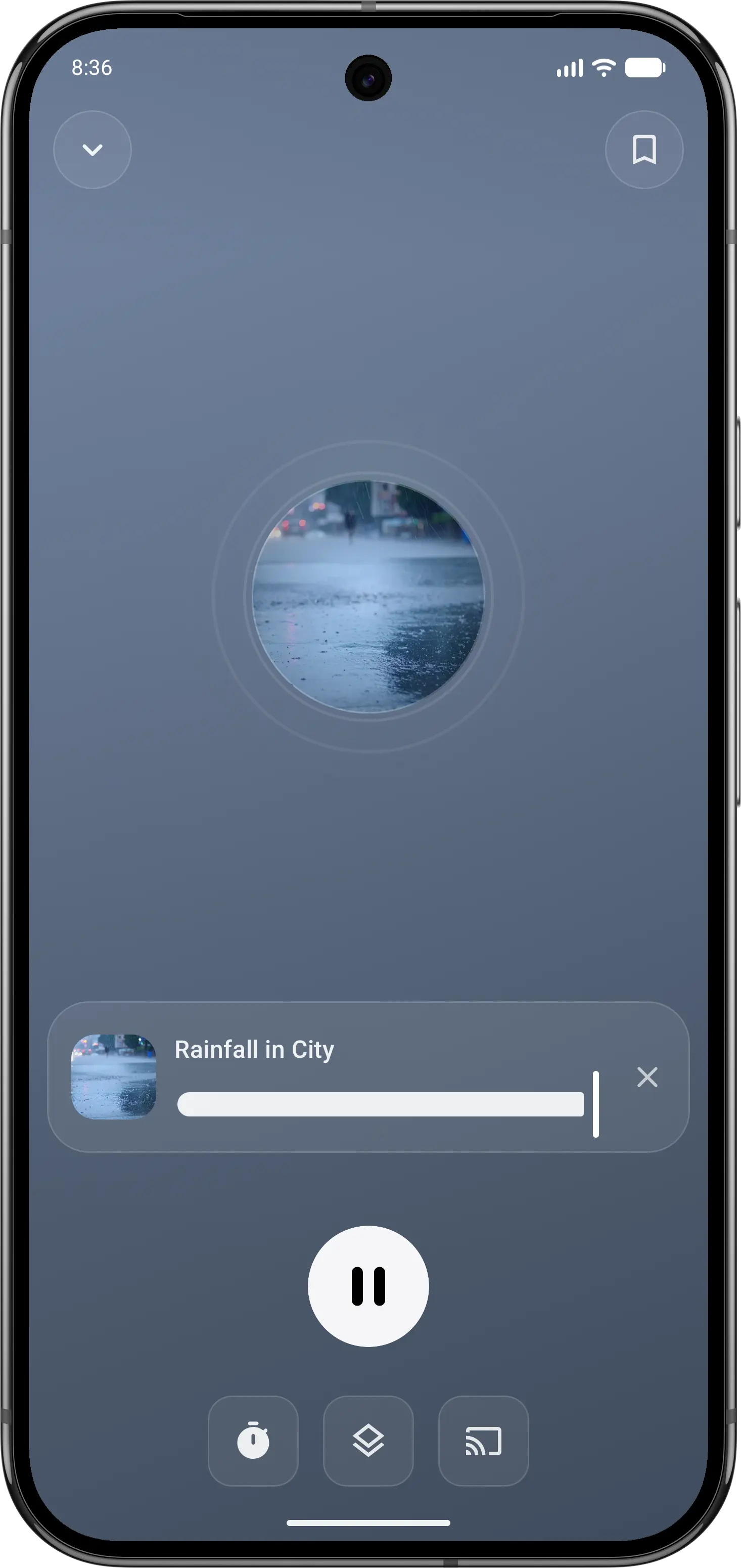
01Find your sound
Start with a familiar rain or nature sound.
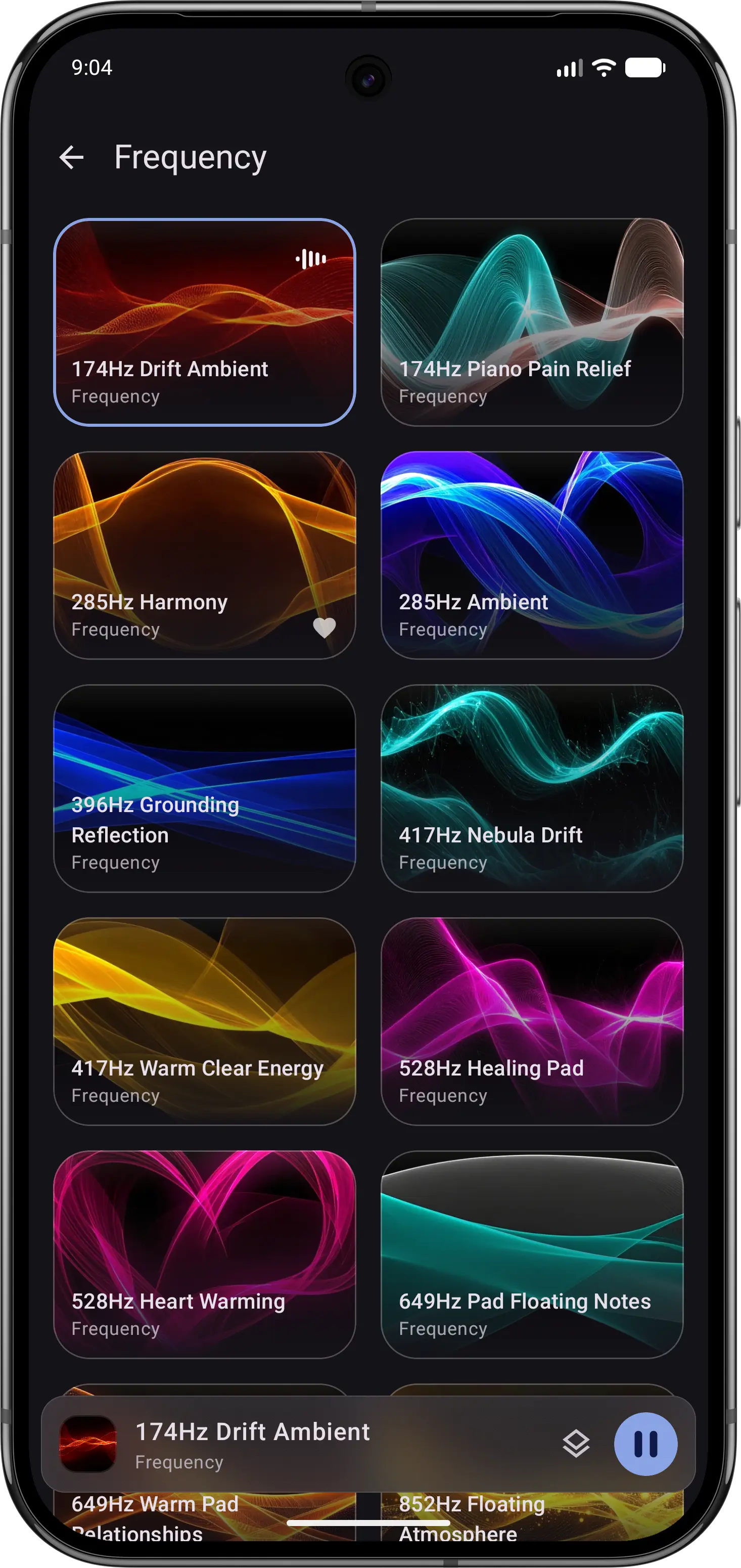
02Explore frequencies
Choose a tone when that is what you want to hear.
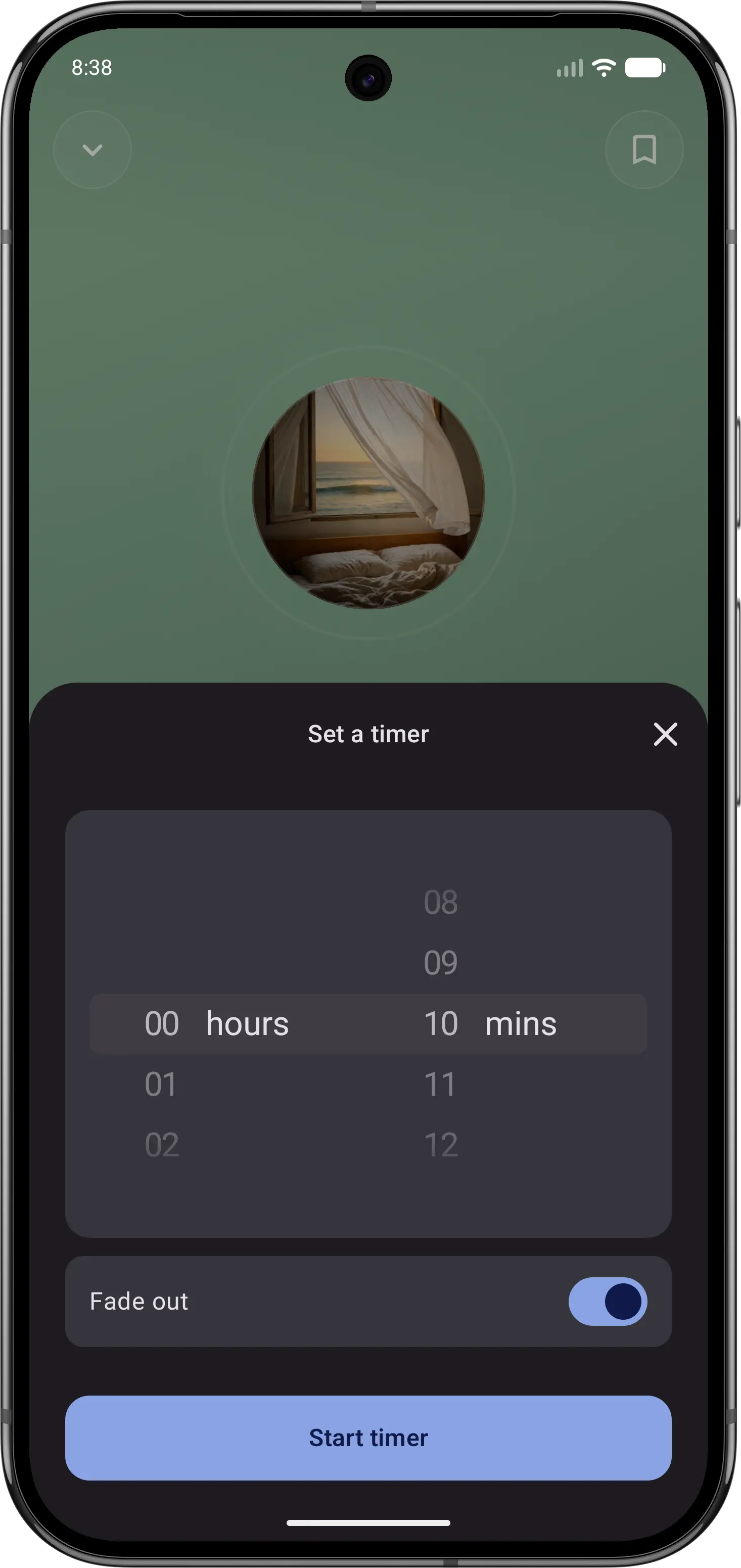
03Let the sound fade
Set a sleep timer, then put your phone down.
Feature comparison
| Feature | Momental | Headspace |
|---|---|---|
| Main focus | Sleep sounds | Meditation |
| Mix your own blend | Yes | Not listed |
| Guided meditations | No | 500+ |
| Entire library is narration-free | Yes | No |
| Brainwave audio (binaural beats) | Yes | For focus |
| Solfeggio frequencies | Yes | Not listed |
| Free to start | Yes | Free trial |
| Premium options | Plans + lifetime | Subscription |
| iOS and Android | Yes | Yes |
| Sleep sounds | Yes | Yes |
| Focus sounds | Yes | Yes |
| Routine reminders | Yes | Meditation |
“Not listed” means we could not confirm a feature on the official product and store pages. It does not mean the feature is unavailable. Momental Premium offers monthly, yearly and lifetime plans; free access does not mean every sound is unlocked.
What can you use for free?
Momental: The Android listing includes 20+ free sounds, individual mixing controls, a fade-out timer and unlimited saved mixes. Premium is optional. On iPhone, check the sounds and access shown in your app before assuming the Android selection is identical.
Headspace’s main library is offered through paid membership, with trial offers that let you evaluate access for a limited period. A trial should not be treated as permanent free access to a favorite Sleepcast or course. Check your current offer, including any benefit or existing membership, before paying for a second app.
Which should you choose?
Use Momental when you want to fall asleep to calming sounds, not narration or guided sessions. You open the app, tap a sound or a saved mix, set a fade-out timer and put the phone down. It covers nature sounds, white, pink and brown noise, binaural beats and Solfeggio frequencies from 174 to 963 Hz, and it is free to start. Premium is available monthly, yearly, or as a one-time lifetime purchase.
Use Headspace when you want a full mental health and mindfulness platform that also helps with sleep. It started as a meditation app and now offers more than 500 guided meditations, sleepcasts, sleep music, focus music, mindful movement, and coaching or therapy options. Its sleepcasts guide you through quiet settings, such as a slow-moving train, with gentle narration. The core difference is philosophy: Momental is a sleep tool, Headspace is a wellness platform, and if you only want ambient sound without talking, you would be paying for a large library you may not use.
Before you switch
Identify whether the part you value is a Sleepcast, a meditation course or a background sound. Momental can offer a different sound routine, but it does not continue a Headspace course or provide the same narrated session. Try ambient listening separately before replacing a guided habit.
Keep Headspace if you still rely on its daytime practice. Your course progress and saved sessions should be treated as part of that app, not something transferred by installing Momental. Compare the subscription against all the content you use, rather than bedtime alone.
Frequently Asked Questions
What does Headspace Premium include?
Headspace's paid plan is a subscription that starts with a free trial and unlocks its full library: more than 500 guided meditations, sleepcasts, sleep sounds and music, focus music including binaural beats, and mindful movement. As of September 2026, its US App Store listing shows $12.99 a month or $69.99 a year, and coaching and therapy pricing varies by plan.
Is Headspace worth it just for sleep sounds?
If sound is all you want at bedtime, most of the Headspace subscription pays for meditation, courses and coaching you may not use. Momental focuses on sleep sounds only and is free to start. If you upgrade, Premium is available monthly, yearly, or as a one-time lifetime purchase.
What are Headspace sleepcasts?
Sleepcasts are longer audio experiences that combine an ambient setting with a calm narrator who talks you toward sleep. They suit people who find a voice soothing. Momental takes the other route, with no talking or narration at all.
Which app is better for falling asleep without talking?
Momental. Everything in it is sound: rain, storms, ocean, wind, noise colors and frequencies, mixed the way you like and faded out by the sleep timer. Headspace also has sleep sounds and music, but much of its sleep content is guided.
Meditation sounds, without a guide.
Choose nature or gentle noise for your own practice.